


By VeVe Staff · January 26, 2026
Space Fairy Tale, Inked With a Japanese Brush
Remember that classic film where two quarrelling servants wander a desert, get captured, and stumble into a mission to protect a princess? She’s this headstrong woman that is grieving the loss of her home and her people, and then later on in the film, an old master faces off against a heavily scarred enemy?
Sounds familiar right? Almost like one the biggest classic films of our time.
You’d be right. It’s Hidden Fortress by Akira Kurosawa, released in 1958.
No? Not the one you were thinking of?
That’s because Star Wars has long been discussed through the lens of Japanese cinema and the feudal Edo period (1603–1868). The Jedi’s monk-like discipline, their two-handed swordplay, even Darth Vader’s armor all echo samurai culture.
Let’s dive into the shared mythic themes and visual languages that resonate across both worlds.
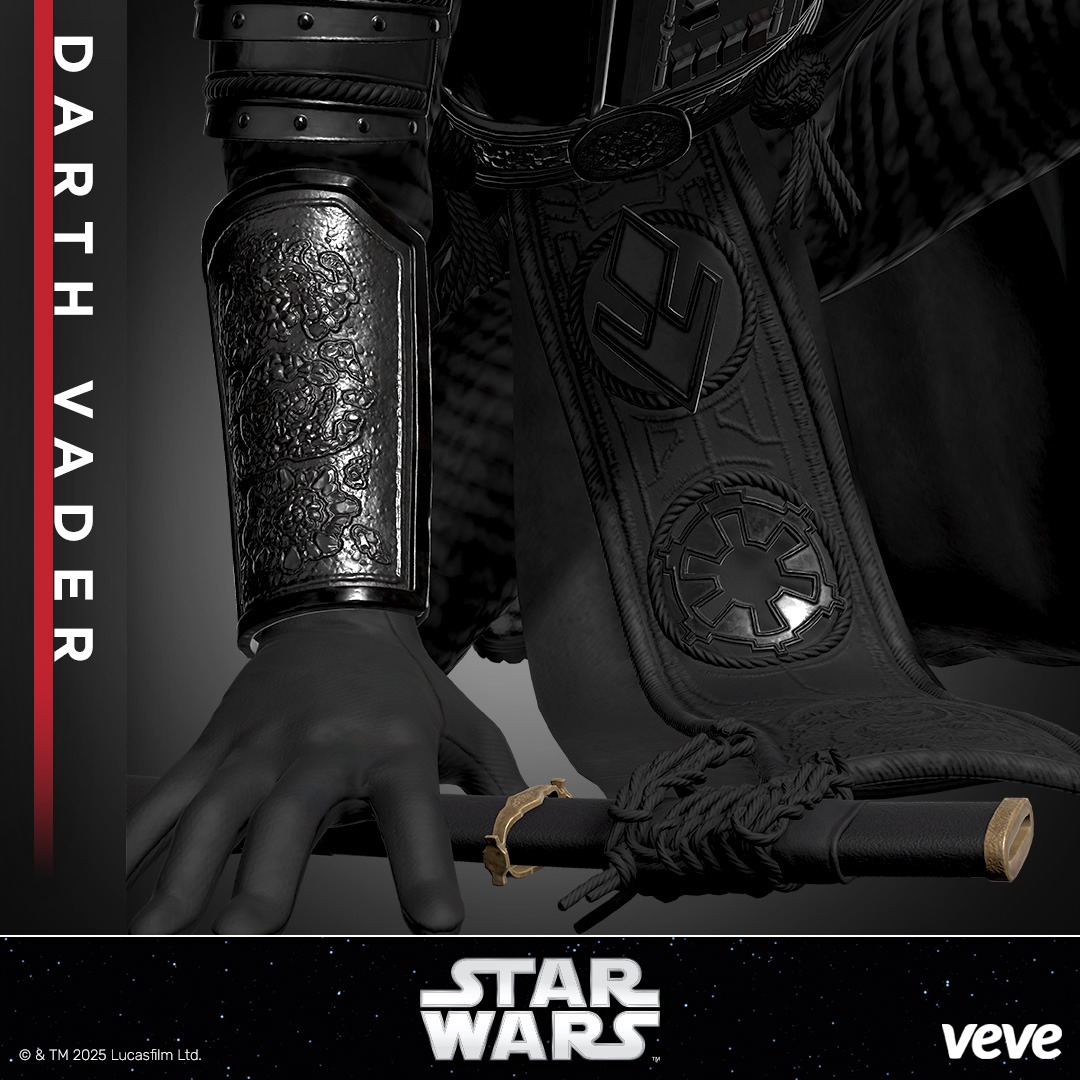
To understand Star Wars, you first need to understand Akira Kurosawa. Widely regarded as one of Japan’s greatest directors, Kurosawa built his reputation on jidaigeki, Japanese period dramas that often told stories of samurai, peasants, and shifting feudal power. His films combined sweeping adventure with deeply human characters, often exploring how ordinary people survive under the weight of larger political struggles.
Long before Star Wars dazzled audiences, jidaigeki films established many of the storytelling and visual conventions associated with samurai epics.
In Kurosawa's The Hidden Fortress, two peasants guide a disguised general and a princess through danger. The parallels between this storyline and the dynamic of R2-D2, C-3PO, Obi-Wan Kenobi, and Princess Leia in A New Hope are hard to miss. Both stories frame epic events through the perspective of the lowest characters, grounding sweeping conflicts in human-scale experiences.
Kurosawa’s visual language is equally striking when viewed alongside Star Wars.The dramatic screen wipes that transition between Star Wars scenes feel closely aligned with Kurosawa’s approach to scene transitions. The long tracking shots of desolate landscapes and armies on the march? Echoes of Kurosawa’s painterly approach to framing.
And, just as Kurosawa’s dramas reflected the feudal conflicts of the Edo period, Star Wars maps those same tensions onto its galactic canvas: the tyrannical Empire versus the struggling Rebellion. It’s not hard to see Star Wars as a kind of jidaigeki in space.
Now, let’s go back to that work for a second.
Jidaigeki.
It’s hard to miss that ‘Jedi’ echoes jidai from jidaigeki.
Much as jidaigeki films feature wandering samurai, warlords, and peasants caught in the conflict, Star Wars translates these elements into its own interstellar setting.
The Galactic Empire’s tyranny and the Rebel Alliance’s struggle can even be seen as a sci-fi twist on feudal era wars between shoguns and upstart clans.
Legendary actor Toshiro Mifune, a Kurosawa regular, has often been associated with discussions of Star Wars’ samurai-era influences. Though Mifune declined, the connection couldn’t be clearer.
The strongest parallel between Edo Japan and our favorite space opera is the Jedi Order.
Bushidō, literally translated as “the way of the warrior”, was the moral and spiritual code that governed samurai conduct. This Code emphasized virtues like honor, courage, loyalty, frugality, and compassion, placing duty and morality above even the commands of one’s lord.
If that sounds familiar, it should. The Jedi Code mirrors these principles: peace over passion, harmony over chaos, service over self.
The Jedi fit naturally into the archetype of the warrior-monk. Like samurai, they trained in martial arts and philosophy, seeking mastery over themselves as much as their enemies. The Jedi ban on attachments echoes bushidō’s demand to put duty above personal ties.
When a Jedi recites the tenets of the Jedi Code like “There is no emotion, there is peace… There is no passion, there is serenity,” you can almost hear the distant refrain of a samurai’s meditations that the Bushidō called for on balance and honor.
And just like history, not all live up to the ideal. Samurai without masters became ronin, wandering and often dangerous. Exiled Jedi after Order 66 follow the same path. Even the Sith can be read as dark ronin, self-serving warriors without honor.
Recent Star Wars stories have made this parallel as well, with the anime short “The Duel” from Star Wars: Visions, featuring a wandering ex-Sith named Ronin, katana-sheathed lightsaber at his side
Come on, that’s pretty much as clear of a reference we’re ever going to get.
Now onto my favorite part of Star Wars.
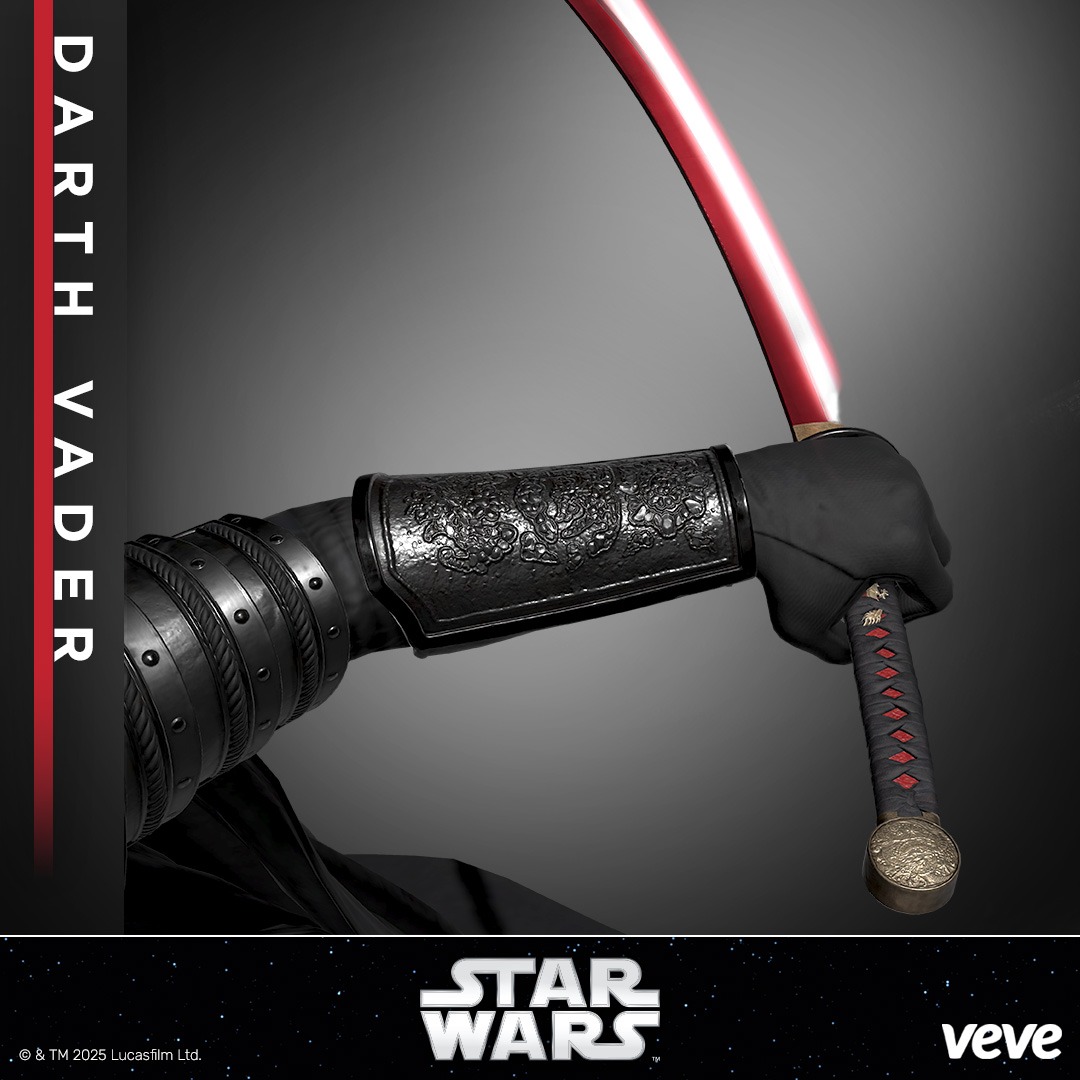
One of Star Wars’ most iconic symbols, the lightsaber, can be read as essentially a katana from the future. Jedi and Sith lightsaber duels were influenced more by the fluid, two-handed fighting style of kendo and Kenjutsu, the martial art of samurai swordsmanship, than by western fencing.
Star Wars choreographers and actors also studied Kenjutsu religiously to shape the elegant moves of lightsaber combat. Full of measured, grounded stances, both fighters waiting patiently to see their opening. These early duels had a sense of ritual as opposed to the quick lunges of European Fencing.
Nerd Note: Of course, early Star Wars films used Japanese swordsmanship as its basis for lightsaber duels. It wouldn’t be until the Phantom Menace, when actor Liam Neeson, who recently had finished notoriously underrated film Rob Roy, that western and european swordsmanship would enter into the films fight choreography. Qui-gon jin’s high guard stance came from the months Liam had spent fighting with a claymore, and felt natural for him to fight in that stance. We would also later be treated to the combat prowess of Christopher Lee who played Count Dooku, who had real world fencing skills and had his lightsaber hilt created in a fencing guard to reflect his fighting style. These two actors played a big part in how lightsaber combat evolved from the original trilogy to now.
-
This similarity in technique was also in the philosophy behind the combat.
For samurai, the sword was an extension of one’s soul. Forged carefully, passed down generations, and only drawn with purpose.
Like samurai blades, lightsabers are personalized, spiritual weapons. Forged in ritual, powered by kyber crystals, and never drawn lightly.
So when a Jedi ignites their blade with that snap-hiss we all love, it’s the sci-fi echo of steel sliding from a sheath.
Beyond philosophy and combat, Star Wars look owes much to Edo-period Japan as well.
The robes and garb worn by Jedi Knights strongly resemble the traditional kimono-like attire of samurai and monks, with their layered, loose and humble aesthetic. Luke Skywalker’s simple tunic on Tatooine, Obi-wan’s flowing cloak, and even the hooded robes of the Jedi Council all could have been taken straight out of a Kurosawa costume department.
This was a deliberate choice, as concept artists drew on Eastern monk and samurai garments to give the Jedi their timeless, spiritual wardrobe. Rather than hulking steel plate or shining knight armor, the Jedi are dressed like the wandering ronin or travelling swordsmen they are, reinforcing their role as wandering guardians.
I mean, look anywhere in the films and it’s hard to not find a connection.
Queen Amidala’s gowns borrow from Kabuki theater costumes, with her attendants in kimono-like attire.
Kylo Ren’s mask repair in the sequels uses kintsugi, the Japanese art of mending broken pottery with gold.
Stormtroopers resemble samurai ō-yoroi with paneled plating and mask-like helmets, despite also echoing modern riot gear.
And towering above it all: Darth Vader.
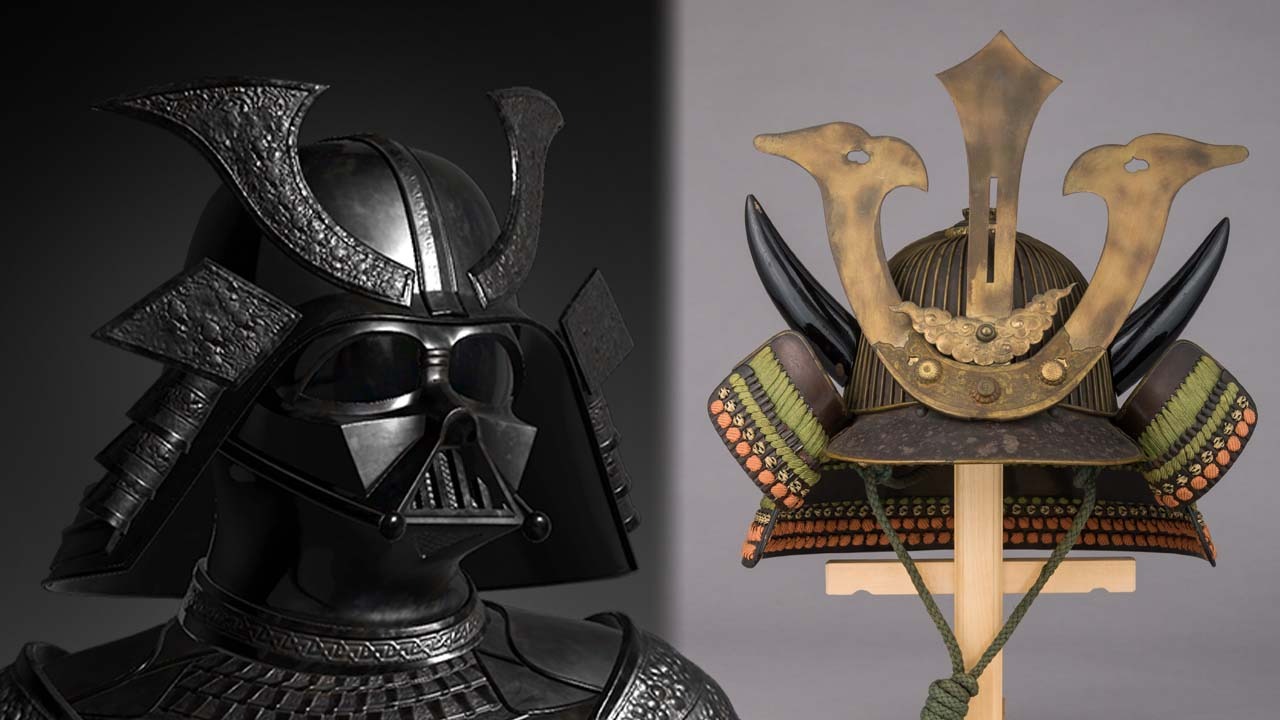
Darth Vader Samurai’s iconic black helmet (right) alongside a 17th-century Japanese samurai helmet and mask (left), highlighting the resemblance. The shape, face mask, neck armor were directly inspired by samurai kabuto helmets and menpō masks
Cue crackling breath sound
Vader’s armor strongly echoes samurai design. Traditional samurai helmets often featured a neck guard flaring out at the base. Darth Vader Samurai’s helmet includes an exaggerated flared neck plate that protects his neck and shoulders, almost identical to Edo-era helmets of the same type. His face mask as well, with its grille and angular eyes, calls to mind the stylized menpō masks samurai wore to intimidate foes.
Ralph McQuarrie’s concept art for Darth Vader reflects many of the same design principles seen in historic samurai armor, including those worn by figures like Date Masamune.
All of this came together to give us the Darth Vader Samurai, the space shōgun we know and love today.
It’s hard not to see Darth Vader differently once the samurai influence clicks. His armor stops feeling like science fiction and starts reading as ceremonial, deliberate, and ancient, closer to a feudal warlord than a movie villain.
That same lineage carries forward into how Vader is interpreted today, where shape, symbolism, and restraint matter more than action. In that way, Darth Vader collectibles for sale on VeVe feel less like merchandise and more like a continuation of the same visual language, preserving the space shōgun as he was always meant to be seen.
Everything you read here is written by fans, for fans. This article was created by VeVe and is not officially affiliated with or approved by any licensor. All content referenced belongs to their respective rights holders.


Founded in 2018, VeVe was created for collectors by collectors to bring premium licensed digital collectibles to the mass market. With over 8 million NFTs sold, VeVe is the largest carbon neutral digital collectibles platform, and one of the top grossing Entertainment Apps in the Google Play and Apple stores. #CollectorsAtHeart

