


By Corey Truax | Head of Brand & Engagement, VeVe · December 18, 2025
I was born in the late 80s. Which means I grew up counting coins. Not metaphorically. Literally.
Pennies lived in couch cushions, car cup holders, and the bottom of backpacks. They mattered. Twenty five of them could become a quarter, and a quarter meant five minutes of freedom at an arcade cabinet glowing in the corner of a pizza shop. That sound of coins dropping into a slot was a kind of permission slip. Playtime approved.
That world shaped how a generation understood value. I’ve seen the numbers, and many of our collectors on VeVe are from this time and place.
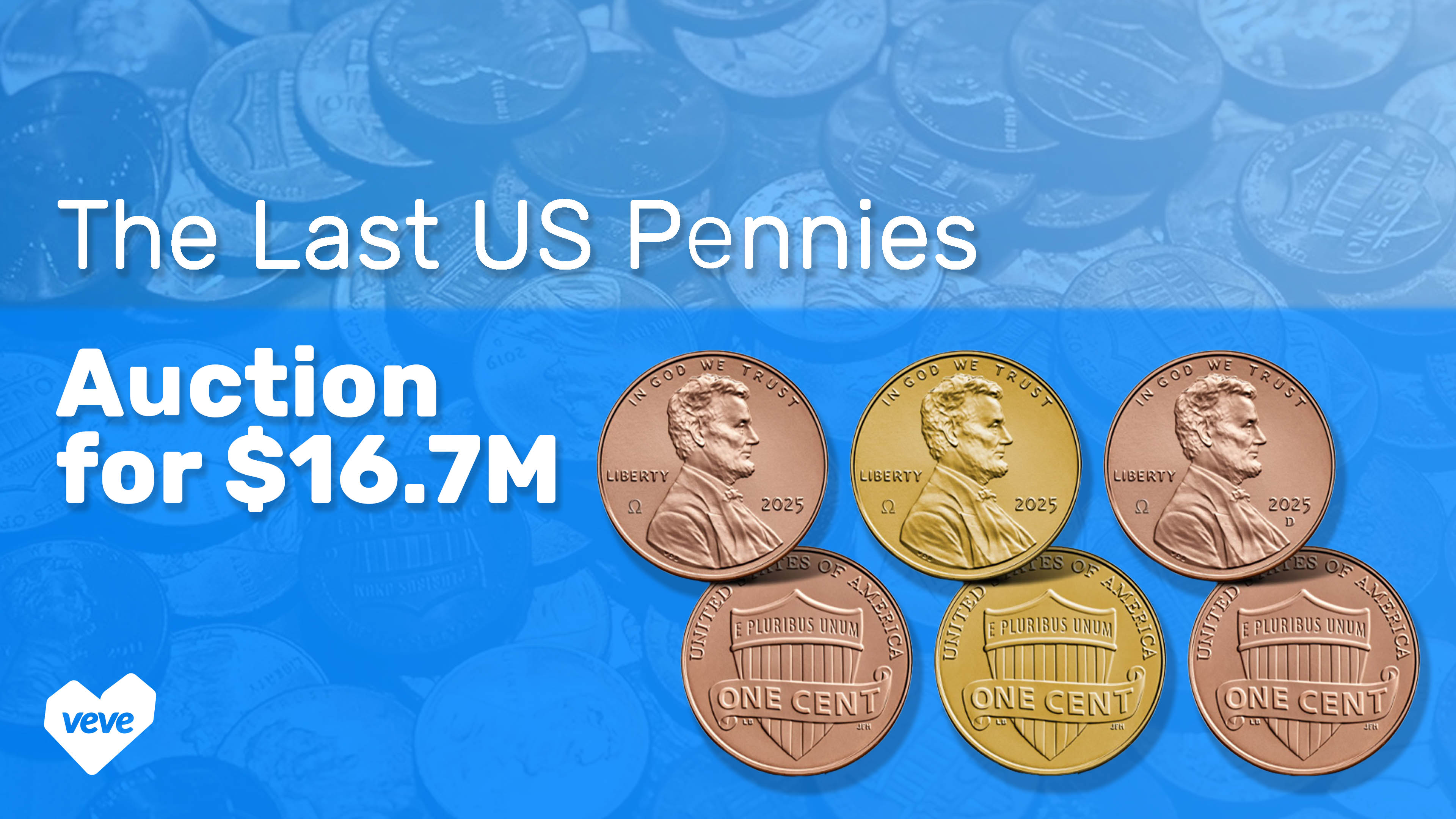
So when news broke that the last US penny anchored a staggering $16.7 million auction event, it felt less like a headline and more like a quiet emotional shift. Not because of the money. Because of what the penny represented.
This was not just another auction result. It was a punctuation mark.
So, how did a handful of pennies turn into 16.7 billion pennies, in terms of value?
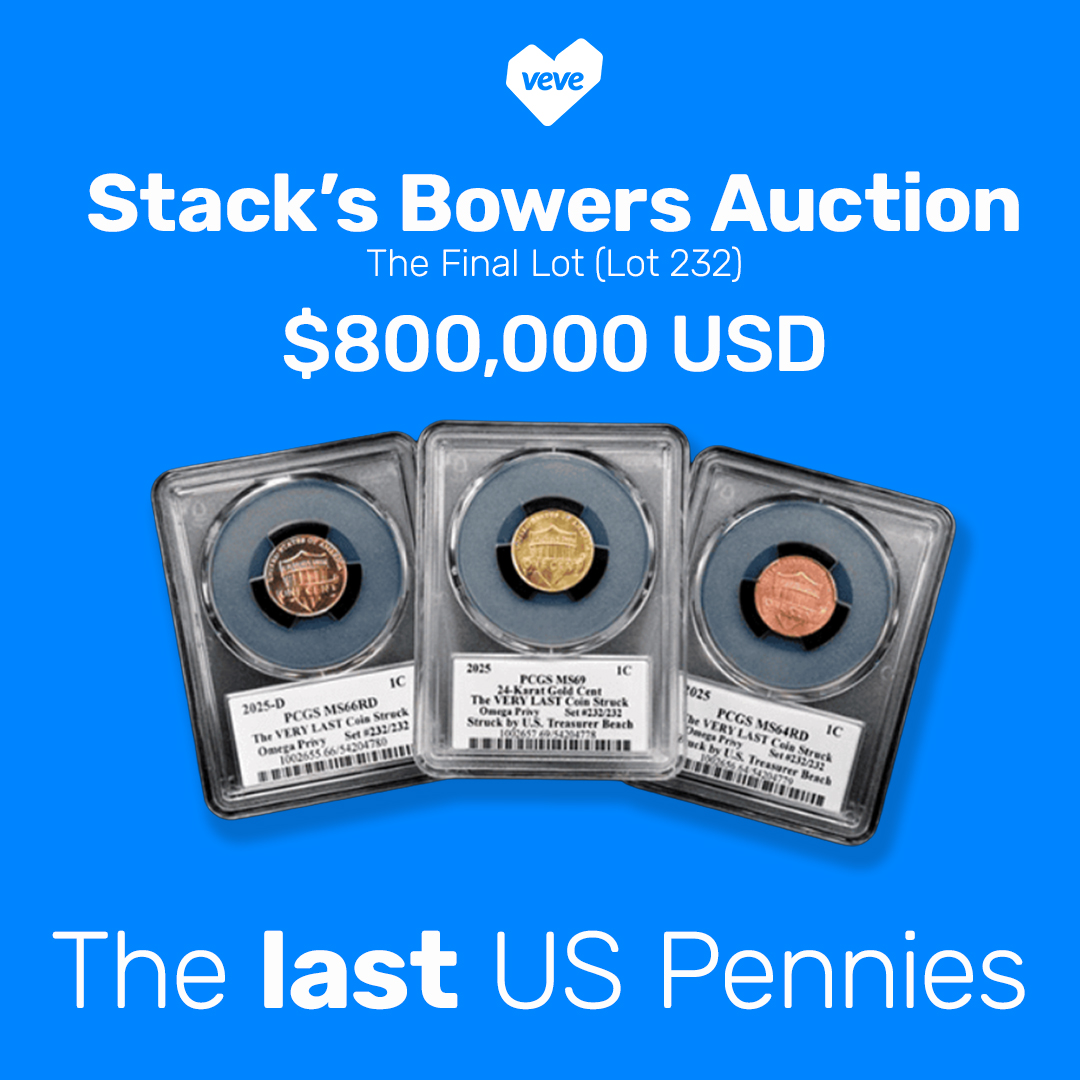
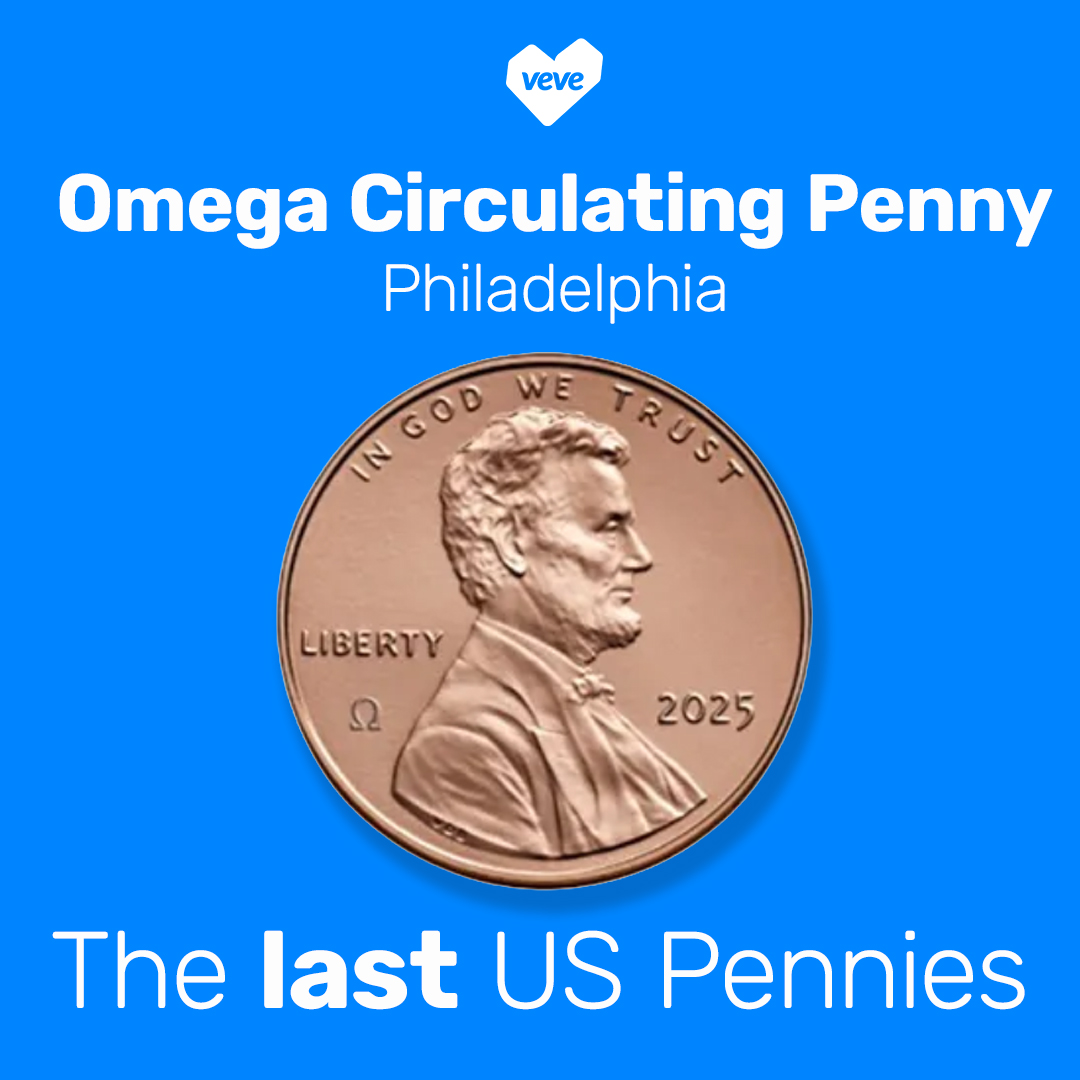
According to Stack’s Bowers Galleries in California, the sale of the final mint of pennies included 232 limited sets, each consisting of three coins tied to the final chapter of the US penny.
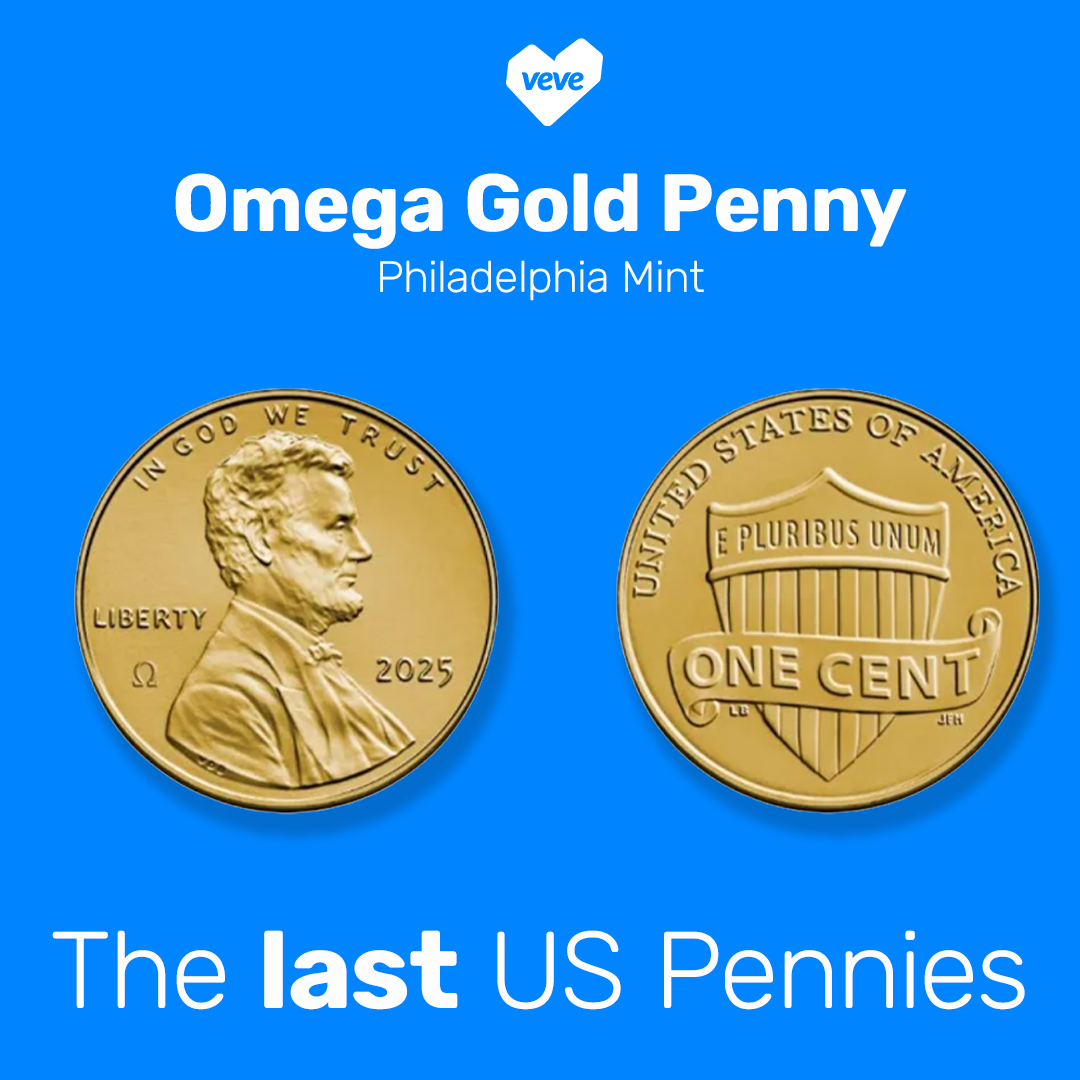
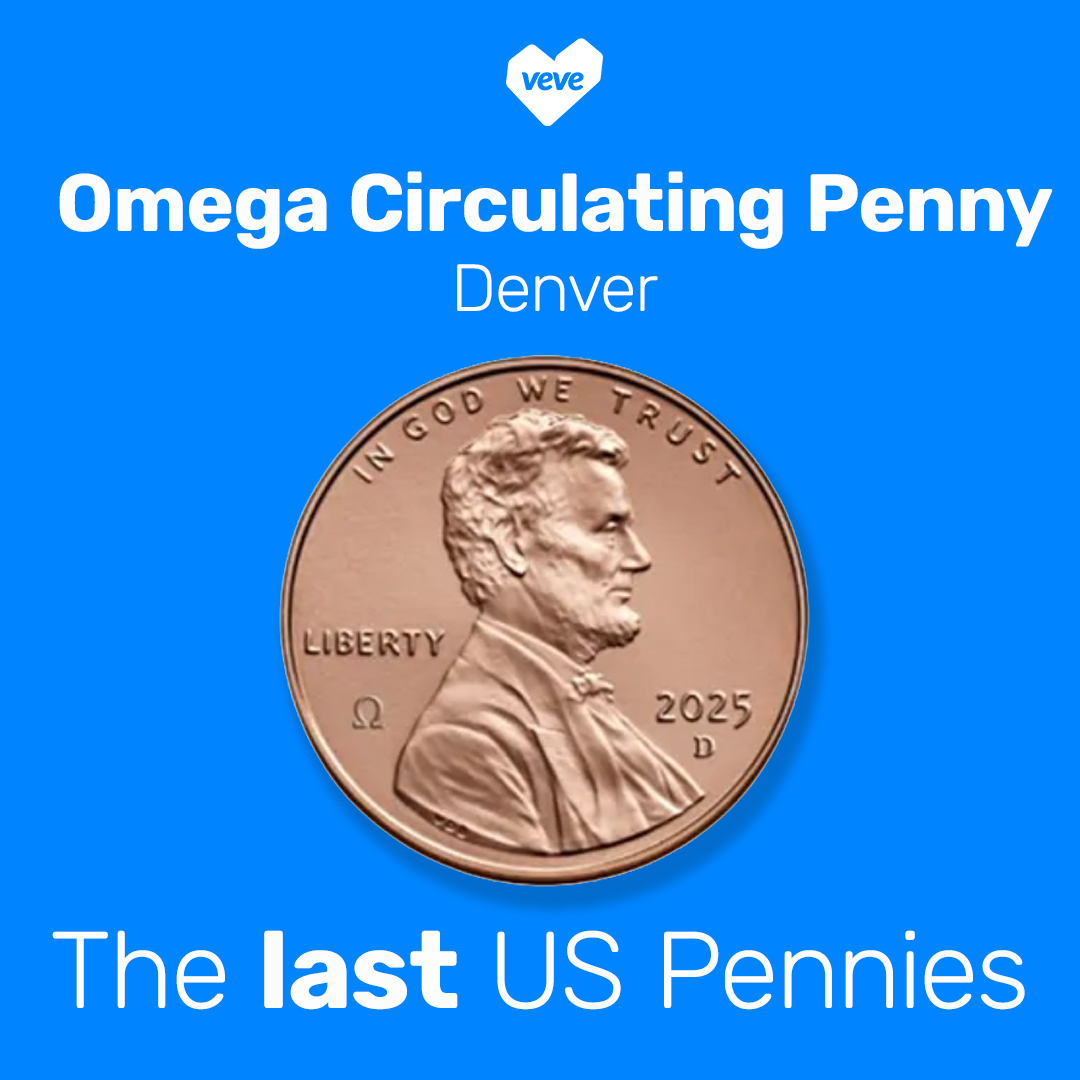
Every set featured a 2025 penny from the Philadelphia Mint, a 2025-D penny from the Denver Mint, and a 24-karat gold penny also struck in Philadelphia. Each coin was marked with a Greek omega symbol, Ω, stamped beside Abraham Lincoln’s profile. The symbol signified the end. Omega as finality.
The number of sets was intentional. Two hundred thirty two lots to represent the 232-year lifespan of a coin first minted in 1793. History, measured precisely.
On average, each trio sold for more than $72,000. The final lot, Set No. 232, reached $800,000. It included the very last circulating pennies from both Philadelphia and Denver, alongside the final gold omega penny ever struck.
For a coin once defined by small change, the final result spoke volumes.
Calling this auction result the most valuable penny ever sold is technically accurate. But it misses the point.
The value was never just in the metal. It was in the story.
This penny came from the final minting run of its kind. It represents the end of an era where physical currency was central to everyday life. Where value was passed hand to hand, not peer to peer through an app.
Our collectors on VeVe understand this instinctively. Scarcity alone does not create significance. Context does. Timing does. Finality does.
The most valuable penny is valuable because it is the last chapter. A relic from the moment when physical money began giving way to something more abstract.
For those of us raised in the late 80s and early 90s, this transition feels personal. We straddled two worlds.
We learned math by counting coins.
We learned speed by racing arcade timers.
We learned trade by swapping duplicates with friends.
But we also adapted early. Dial-up gave way to broadband. Physical collections made room for digital libraries. Music, movies, and games all moved from shelves to screens, and we followed without fully letting go of the nostalgia.
That is why the story of the last US penny hits differently for this generation. It's not just about money disappearing. It is about touchpoints fading. Moments that shaped us become artifacts instead of habits.
Here is the part that often gets lost in conversations like this.
Collecting does not die when formats change. It migrates.
Coins did not replace barter because barter failed. They replaced it because society evolved. Digital value is following the same trajectory. The format doesn’t matter. It is the meaning we assign to ownership.
That is why the rise of digital collectibles, especially on VeVe, feels less like a disruption and more like a continuation. The same instincts apply. Scarcity. Provenance. Display. Pride. Community.
The difference is access.
Where once collecting required physical storage and geographic proximity, digital collecting removes those barriers. Your collection lives with you. It travels with you. Evolves with you.
That does not make it lesser. It makes it different.
The auction result tied to the last US penny is not an outlier. It is another signal.
We are watching physical artifacts reach peak symbolic value at the same time digital ownership becomes normalized. That overlap is where modern collecting lives.
The most valuable penny did not become valuable because pennies are suddenly useful again. It became valuable because it represents a moment we all recognize. The point where analog life finally tipped into something else.
That recognition is powerful. And collectors are always the first to feel it.
At VeVe, coins and stamps exist alongside characters, comics, and culture. Not as replacements for physical collectibles, but as digital expressions of the same instinct that once had us counting pennies on a bedroom floor.

Digital does not erase the past; digital preserve and honors that history for eons to come. With a free $10 to start your collection, anyone can start to engage with history in a format that reflects how we live now. Always connected. Always evolving. Still deeply personal.
The penny taught us that small things could add up to something bigger. That lesson still holds. It just lives in a different place.
The world is becoming more digital. Collecting is not becoming less meaningful. It is simply becoming lighter to carry.
And for those of us who once turned twenty five pennies into five minutes of joy, that feels like a fair trade.
Everything you read here is written by fans, for fans. This article was created by VeVe and is not officially affiliated with or approved by any licensor. All content referenced belongs to their respective rights holders.


Founded in 2018, VeVe was created for collectors by collectors to bring premium licensed digital collectibles to the mass market. With over 8 million NFTs sold, VeVe is the largest carbon neutral digital collectibles platform, and one of the top grossing Entertainment Apps in the Google Play and Apple stores. #CollectorsAtHeart

