By VeVe Staff · December 6, 2025
If you’re the kind of collector who gets excited by red porcelain buttons, glowing bottle outlines, or the hum of old neon, you already know the magic of Coca-Cola neon signs. These signs aren’t just advertising. They are Americana at its most iconic. From buzzing above Route 66 diners to lighting up Piccadilly Circus, Coca-Cola neon signs helped turn a soft drink into a global symbol of cool, refreshment, and timeless design.
Now that legacy is being set in stone for the digital age. VeVe is releasing officially licensed Coca-Cola neon signs as limited edition digital collectibles, with multiple variants styled after classic formats. Each one is made for display in stunning 3D and augmented reality, and the Secret Rare version is limited to just 150 editions worldwide. If you love collecting, this is your chance to grab a piece of Coca-Cola history that glows forever.
Coca-Cola began using neon signs in the 1920s and 1930s, right as neon technology was catching fire with advertisers around the world. French engineer Georges Claude introduced the neon tube in 1910, and it didn’t take long for Coca-Cola to recognize its potential. Early signs were handcrafted in France, where neon signage first took off, before spreading to other parts of Europe. By the 1930s, Coca-Cola neon signs were appearing across the United States, glowing from soda fountains, pharmacies, and local storefronts.
Neon arrived just in time for Coca-Cola’s golden age of advertising. The first signs were built by skilled craftsmen in France, where the tech was born, and soon made their way into European streetscapes. But it was in the U.S. where the glow really caught people's attention. By the 1930s, Coca-Cola neon signs were lighting up soda fountains, pharmacies, diners, and even gas stations, turning everyday spots into branded experiences.

The first Coca-Cola neon signs were handcrafted in France, where neon lighting was invented and perfected by skilled glassworkers. These early neon signs were true works of craftsmanship because of the hand-bent tubing and painted steel backings that made each one unique. As demand grew, production expanded to the United States in the 1930s, where American signmakers began creating designs tailored for diners, soda fountains, and gas stations. Over time, Coca-Cola neon signs were also produced in places like Japan, Australia, and South America, each region putting its own spin on the brand while keeping the glow alive. Whether built in Paris or Pittsburgh, these signs were made to grab attention, turn heads, and give Coca-Cola an undeniable presence wherever they were lit.

This era introduced the now-iconic round porcelain “button” signs—bright red with the classic Coca-Cola script in white. The neon signs were accented with neon tubing around the edges. These signs were built tough with enamel over steel and designed to last outdoors. They became a standard fixture outside soda fountains and general stores across the country.
Coca-Cola signage got bolder with shield-shaped and triangle-style formats. These signs commonly featured slogans like “Ice Cold Coca-Cola” and used sharp lines and angles to stand out on roadside diners, service stations, and cafés. The glow from the red and green neon tubing turned heads day or night.
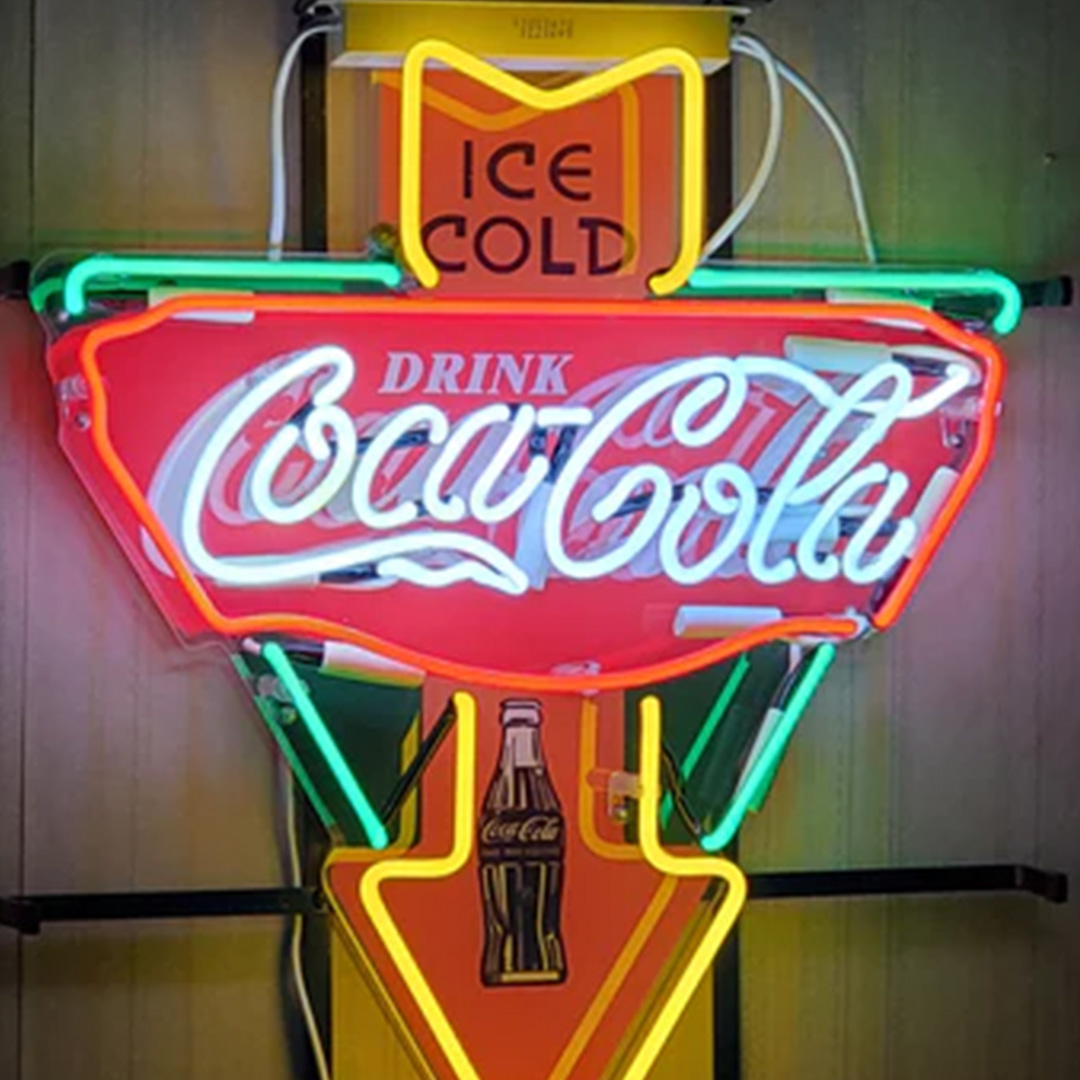
The postwar boom brought in bottle-shaped neon signs and directional arrows pointing thirsty customers toward the nearest Coke cooler. These playful, practical designs became common in gas stations and corner stores and helped Coca-Cola cement its place in everyday American life.
Innovation took center stage with animated signs, motorized spinning discs, and plastic-and-metal hybrid designs. Logos like “Enjoy Coca-Cola” appeared in lightbox formats, often backlit or rimmed with neon for visual punch.
Coca-Cola neon signs lit up soda fountains, drugstores, gas stations, and diners across America, turning ordinary storefronts into glowing invitations. From the backroads of Route 66 to the heart of small-town main streets, they became familiar beacons of refreshment. But their reach didn’t stop at the U.S. Coca-Cola went global with massive neon displays like the towering 1954 sign in London’s Piccadilly Circus and the animated Five Points sign in Atlanta. These were not just advertisements. They were landmarks that helped define the look of cities, roadsides, and popular culture for generations.
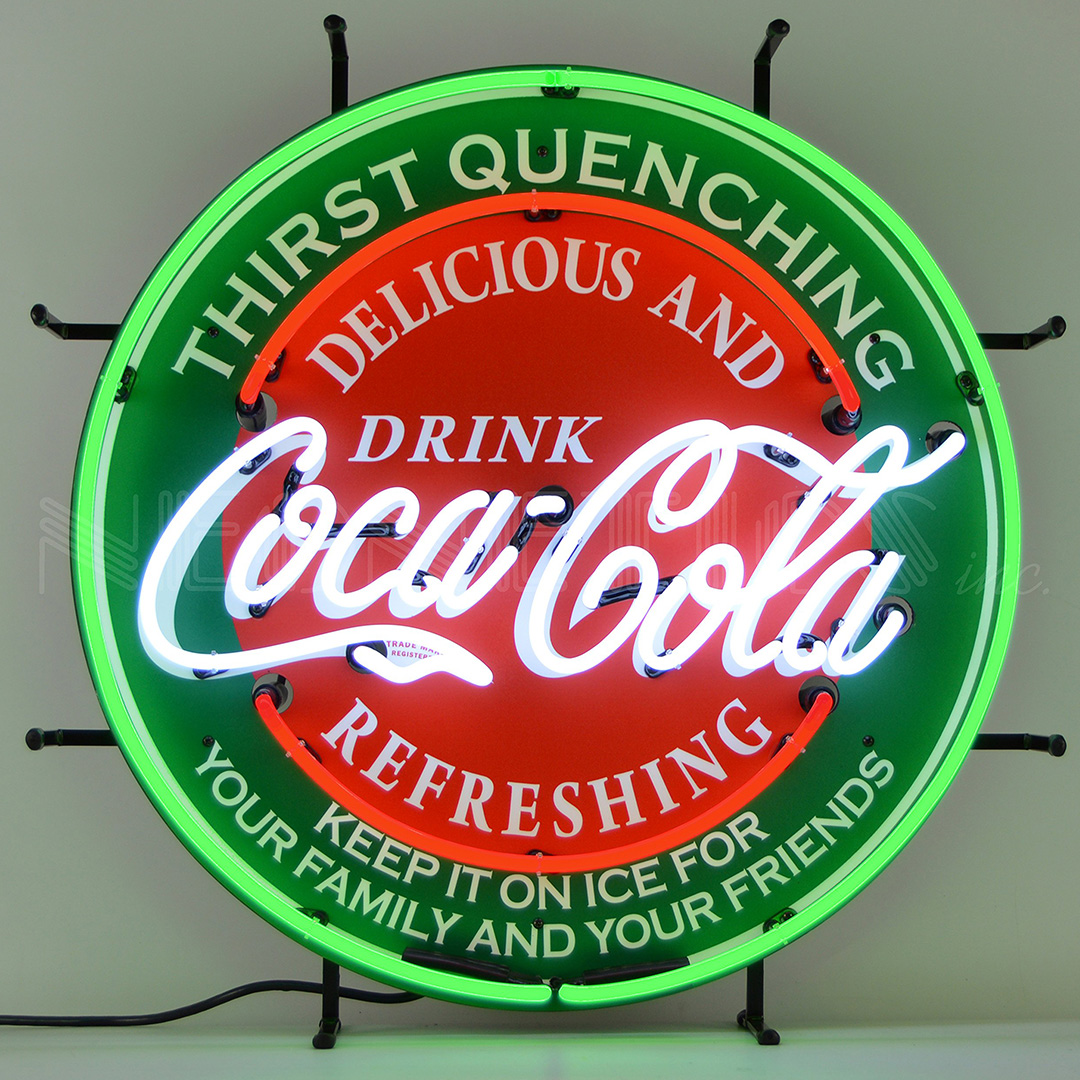
Original Coca-Cola neon signs were truly built to last. Craftsmen started with heavy-gauge steel or porcelain enamel backings, designed to withstand weather and time. Glass tubes were heated and carefully hand-bent to trace out the iconic Coca-Cola script or bottle shapes. Inside those tubes, neon or argon gas created that signature glow we all know. Wiring and transformers were manually installed, and each sign was assembled piece by piece in small regional shops. These weren’t factory-stamped ads. They were handcrafted displays, often customized for the location they were going to. That’s part of what makes surviving originals so rare and valuable today.
Coca-Cola neon signs have become some of the most collectible and recognizable pieces in the vintage advertising world.Their bold colors, iconic shapes, and nostalgic glow have turned them into must-have items for collectors of Americana, antique signage, and classic brand memorabilia. From red porcelain button signs to bottle-shaped neon displays and motorized spinners, Coca-Cola signage offers unmatched variety and visual appeal.
Original signs with working neon tubes or early designs from the 1930s and 1940s can sell for thousands of dollars today at auction. Even signs with wear and damage retain value, especially when they feature authentic materials or hard-to-find formats. As demand rises, Coca-Cola neon signs continue to stand out as top-tier collectibles that represent both advertising history and personal nostalgia.
.jpg)
The golden age of Coca-Cola signage is back in a whole new way. VeVe is releasing officially licensed Coca-Cola neon sign collectibles as limited edition NFTs. Each one is based on real vintage designs, from glowing bottle silhouettes to classic red button signs, and they can be displayed in 3D or augmented reality right from your phone. These are true digital collectibles, complete with rarity tiers and fixed edition sizes. The Secret Rare version has only 150 editions available, making it one of the most exclusive Coke collectibles ever made. New to VeVe? Sign up today and get $10 free to start your collection. Download the app, pick your favorite, and bring home a piece of Coca-Cola history.
Everything you read here is written by fans, for fans. This article was created by VeVe and is not officially affiliated with or approved by any licensor. All content referenced belongs to their respective rights holders.
Founded in 2018, VeVe was created for collectors by collectors to bring premium licensed digital collectibles to the mass market. With over 8 million NFTs sold, VeVe is the largest carbon neutral digital collectibles platform, and one of the top grossing Entertainment Apps in the Google Play and Apple stores. #CollectorsAtHeart